Entering the "China-Uganda Liaoning-Shenyang Industrial Park" and enjoying the policies of the Uganda Free Trade Zone
1、Enterprises can enjoy tax exemption benefits for the import of machinery and equipment, vehicles, and raw materials;
2、The enterprise is entitled to a 10-year exemption from corporate income tax;
3、Tax exemption for building materials used in the construction of factories independently built by enterprises;
4、The enterprises in the park enjoy the tariff and trade policies of Uganda and other countries. Most of the products exported by Uganda enjoy tariff-free policies in both developed and developing countries.
5、Enterprises in the park are eligible for a visa fee of USD 400 per year for non-local personnel (USD 2,500 per year for those outside the park)
6、Enjoy a preferential electricity price of 5 cents per kilowatt-hour, and the park provides enterprises with the service of "direct water, electricity, and gas supply to the factory"
7、Exemption from 6% provisional income tax.
Loose foreign exchange control policy
The Investment Act of Uganda stipulates that investors with investment licenses have the right to remit funds abroad for one of the following purposes:.
1、Repay foreign loans or interest
2、Distributing dividends to non-Ugandan shareholders or Ugandan shareholders residing outside the country
3、Royalties under agreements for the transfer of payment technology or specialized knowledge
4、Payment of remuneration or other allowances to foreign employees associated with enterprises in Uganda
5、Remittance of profits or asset liquidation proceeds
one、one-stop service center
The industrial park service platform assists enterprises in all business processes, including company registration, bank account opening, tax registration, investment permit application, trading permit application, certificate of origin for original exports, trademark certification, and testing. It ensures the efficiency of enterprise license applications while reducing hidden costs for enterprises. Departments such as taxation, legal affairs, customs, and product testing can provide on-site services to enterprises within the industrial park. Enterprises can complete all business processes in a one-stop manner within the park, significantly reducing time and economic costs and effectively improving operational efficiency.
The park is equipped with a 33,000-volt high-voltage substation, a comprehensive telecommunications network, a water plant, and an administrative office area, achieving the "seven accesses and one leveling" standard. It has also attracted the presence of DTB and Centenary banks. The park has planned to build a sewage treatment plant, residential areas, commercial activity areas, as well as living supporting activity venues such as basketball courts and football fields
As a national-level industrial park, the Uganda-China Liaoning-Shenyang Industrial Park provides comprehensive investment service support for enterprises settled in, covering multiple dimensions such as infrastructure, administrative services, human resources, and market expansion. Through the "policy + service + resource" three-in-one model, it provides investors with full-cycle support from landing to expansion. Infrastructure and operational support
1. High-standard facilities and amenities
Stable power supply: The park is directly connected to a 33,000-volt high-voltage substation, ensuring worry-free power supply with minimal voltage fluctuations.
Logistics network: Located adjacent to the Kampala-Jinja Expressway, it is 55 kilometers away from the capital, boasting convenient transportation and reduced logistics costs.
2. Bonded and customs clearance services
The park has a customs clearance and bonded area, where imported and exported goods can enjoy priority processing and reduced customs clearance time.
The logistics team provides one-stop customs clearance, warehousing, and transportation services, integrating resources from the East African Community (EAC) as well as European and American markets.
Two、Administrative and compliance support
1. "One-stop" government services
The park has introduced functional departments such as customs, registration, and commodity inspection, providing full-process services including enterprise registration, tax registration, and visa processing, with the approval cycle shortened to 20 working days.
Support enterprises in applying for Uganda Tax Identification Number (TIN) and Value Added Tax (VAT) registration to ensure compliant operations.
2. Policy consultation and risk avoidance
The park provides dynamic policy interpretation, including tax incentives, land approval, labor regulations, etc., to help enterprises avoid compliance risks.
Assist enterprises in complying with regulatory requirements such as the Anti-Corruption Act of Uganda, thereby reducing operational costs.
Three、Human resources and skills training
1. Localized employment support
Establish a staff training center to effectively mitigate labor risks through resource integration, with training content comprehensively covering skills enhancement and knowledge of safe production.
Collaborate with universities in Uganda to cultivate skilled workers with targeted training, addressing the shortage of high-end talent.
2. Flexible employment policy
Actively advocate for enterprises to employ local labor, ensure that the ratio of foreign to local employees follows the 1:5 rule, and strictly adhere to the payment requirements of the National Social Security Fund (NSSF).
Four、Market expansion and industry chain integration
1. Regional market access
Relying on the East African Community (EAC) and the African Continental Free Trade Area (AfCFTA), products can enter the market of 300 million people tariff-free.
Support enterprises to export to Europe and the United States by utilizing the African Growth and Opportunity Act (AGOA) and enjoy tariff-free treatment.
2. Industrial chain collaboration
The park has successfully established core pillar industries such as equipment manufacturing, architectural ceramics, and food processing, effectively promoting the agglomeration and collaborative development of upstream and downstream enterprises.
Case: Wangkang Ceramics Factory, through localized production, exports to neighboring countries, generating over 10 million US dollars in foreign exchange annually.
Five、Investment full-process service
1. Support throughout the entire lifecycle, from registration to operation
Preliminary consultation: We provide in-depth analysis of Uganda's investment environment, industry research, and risk assessment, covering various aspects such as the current economic development status, industrial structure, inflation rate, current development status of major industries, key supported or prioritized industries, mineral resources, improvements in the investment environment, legal environment, political stability, market potential, human resources, and infrastructure construction.
On-the-ground services: Assist in site selection, factory construction, equipment import, and release operation manuals for each stage.
Continuous tracking: Regularly visit enterprises to solve practical problems in operation.
2. Digital platform empowerment
The park has successfully established core pillar industries such as equipment manufacturing, architectural ceramics, and food processing, effectively promoting the agglomeration and collaborative development of upstream and downstream enterprises.
Establish an online service platform to achieve digital management of businesses such as enterprise registration, tax declaration, and logistics orders.
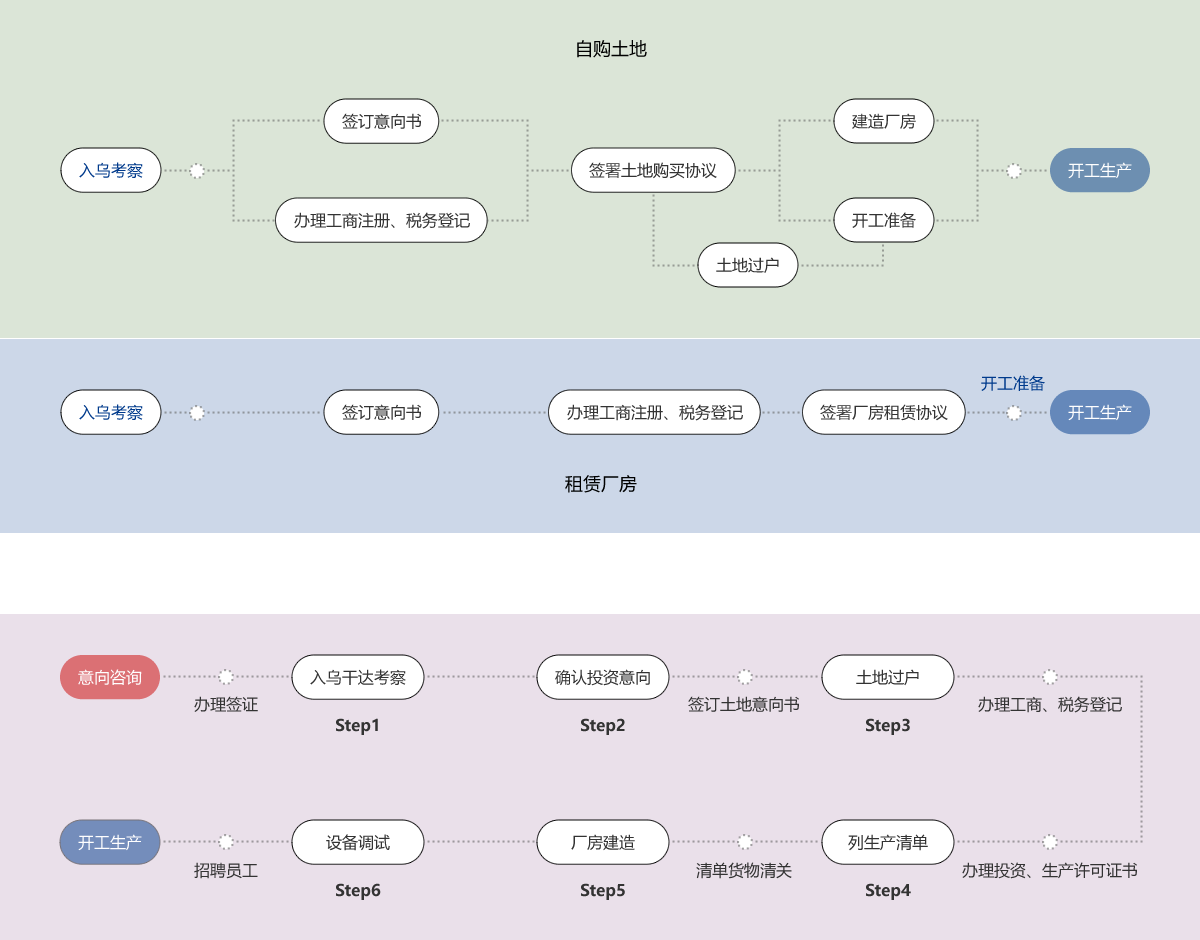
Sino-Uruguayan Liaoning-Shenyang Industrial Park Investment Schematic
1、What are the geographical environment and climatic characteristics of Uganda?
Uganda is located in eastern Africa, straddling the equator and is a landlocked country. Its northern border is with South Sudan, it is adjacent to Kenya in the east, connected to the Democratic Republic of the Congo in the west, and borders Tanzania and Rwanda in the south. The country covers an area of approximately 241,500 square kilometers, mainly consisting of plateaus at an altitude of 900 to 1500 meters, with lakes and swamps accounting for 18.3% of the land area. Uganda not only boasts Mount Rwenzori (Mount Margherita), the third highest peak in Africa, with an elevation of 5,109 meters, second only to Mount Kilimanjaro and Mount Kenya, and is recognized as a natural heritage site by UNESCO and listed on The World Heritage List; it also possesses Lake Victoria, the second largest freshwater lake in the world. The country has a tropical savanna climate, with an annual average temperature of 22.3℃ and annual precipitation ranging from 1000 to 1500 millimeters. The rainy season is mainly concentrated from March to May and from September to November, with the remaining months being the dry season. Overall, the climate here is pleasant and the rainfall is just right. It was praised as the "Pearl of Africa" by former British Prime Minister Winston Churchill.
2、What are the advantages of Uganda's foreign exchange control policy?
Uganda adopts a liberal foreign exchange policy with relatively relaxed foreign exchange controls, offering the following advantages:
In terms of free exchange, both domestic residents and foreigners can freely trade foreign exchange at the market exchange rate. Opening a foreign exchange account is also extremely convenient, requiring only the submission of basic documents such as company registration information and business license.
Capital flow freedom: Foreign-funded enterprises are able to freely repatriate capital and profits, with only a bank fee of 0.2% to 0.5% required, and no additional taxes to be paid.
Convenience of carrying cash: Foreigners are not required to declare cash when crossing the border. This policy is particularly suitable for industries that require flexible allocation of funds, such as trade and energy development.
3、What are the advantages of investing in Uganda?
Uganda is located in the heart of East Africa, boasting a strategic location that allows its products to easily reach neighboring countries. With a warm and pleasant climate throughout the year, Uganda enjoys political stability and deep friendship with China. Its economy is highly liberalized, with no restrictions on foreign investment in terms of industry or investment ratio, and capital flow and currency exchange are free. Coupled with its high population density and low labor costs, the market potential is immeasurable. Additionally, Uganda has a robust investment and business legal system. As a member of the East African Community and the Common Market for Eastern and Southern Africa, its products can enjoy preferential treatment when entering other member countries.
4、What are the areas where the government encourages investment?
Agricultural product processing industry. Uganda possesses advantages in developing the agricultural product processing industry, which is highly valued by the government. Mining industry. The government encourages and requires the processing of ore raw materials to increase export value-added. Tourism. Uganda's tourism industry has great potential for development, and the government is intensifying promotional efforts and increasing infrastructure investment to promote its development. Information and communication industry. Investments in this industry can create numerous job opportunities.
5、What is the land policy in Uganda?
Ownership restrictions: According to the Constitution of Uganda, land ownership is restricted to Ugandan citizens. Foreigners may obtain land use rights through leasing, with a maximum term of up to 99 years.
Risk warning: Investors should be aware of the risks associated with land boundary disputes and government-mandated land expropriation. It is recommended to conduct property rights verification through a lawyer and sign a formal lease agreement.
6、What about Uganda's human resources?
Labor resources: Uganda has a population of approximately 49.9 million (as of 2024), with an average age of 20, and low labor costs.
Current skill status: English is widely used, yet there is a shortage of skilled workers. Enterprises often rely on internal training and collaboration with local universities to cultivate the technical talents they need.
Social security requirements: Employers must contribute to the National Social Security Fund (NSSF) for their employees at a rate of 15% (5% from the employee and 10% from the employer), and provide medical insurance and work-related injury insurance.
7、What are the wage levels and tax rates in Uganda?
Salary overview: The monthly salary range for ordinary workers is roughly between 450 and 550 RMB.
Taxation and Tax Rates: The Uganda Revenue Authority (URA) is the government's primary agency responsible for managing and collecting various taxes. The URA comprises the National Revenue Authority, the Customs and Excise Department, and the Investigation Bureau, among others, which oversee the administration of diverse tax categories. The main types of taxes include corporate and personal income taxes, customs duties, urban construction taxes, withholding taxes, value-added taxes, consumption taxes, and stamp taxes.
【Tariff, urban construction tax, and withholding tax】 In the import process, import tariff, urban construction tax, and withholding tax are involved. Depending on the classification of goods, the tariff rate ranges from 0% to 25%, the urban construction tax is 1.5%, and the withholding tax is 6%.
【VAT】 Enterprises with taxable annual sales exceeding 150 million Uzbek soums (approximately $41,500) are identified as general taxpayers and are required to register for VAT and file monthly VAT returns. The VAT rate is 18%.
【Consumption tax】 The tax rate varies significantly based on different classifications of goods, ranging from 5% to 200%. For example, soft drinks are taxed at 13%, alcohol at 80%, and cigarettes at 200%.
The tax rate for [Stamp Duty] varies depending on the transaction method, ranging from 0.5% to 1%.
8、How to apply for a work visa to Uganda?
Visa type:
【Tourist Visa】For initial entry, you need to apply for an electronic tourist visa to Uganda on the official website of the Uganda Immigration Service. After successful application, you can proceed with the entry procedures at Entebbe International Airport with the printed electronic visa and payment receipt. The fee is USD 50.
【Work Visa】 is a necessary visa for legally working in Uganda. It is categorized into different levels based on the type of work, generally at the CLASS G2 level.
【Temporary Visa】 is a legal visa issued during the process of obtaining a work visa, with a maximum duration of 8 months. It is generally processed in three stages (3+2+3), and each passport can be issued with temporary residence up to three times.